
But hatred is best combined with Fear. Cowardice, alone of all the vices, is purely painful—horrible to anticipate, horrible to feel, horrible to remember; Hatred has its pleasures. It is therefore often the compensation by which a frightened man reimburses himself for the miseries of Fear. The more he fears, the more he will hate. And Hatred is also a great anodyne for shame. To make a deep wound in his charity, you should therefore first defeat his courage. (Screwtape to Wormwood, in C.S. Lewis, The Screwtape Letters)
I think we humans have a tendency to either underestimate fear or overestimate fear. We underestimate by not paying attention to our emotional states of fear, or we overestimate it by letting it rule our lives. Either way, fear is a terrible decision maker.

I’ll explain by way of a story. Brian grew up in a home where he was mostly neglected and felt like he didn’t belong. Whenever his parents did pay attention to him or give him a compliment (which was not often), floods of joy and happiness would overcome him. He craved that feeling, so he would do things, sometimes in annoying excess, to gain their attention, like trying to impress them with a newly learned magic trick or a successful somersault, but his parents were too focused on bickering at each other that they were not impressed. His parents eventually divorced, which led to Brian getting even less attention than before. His somersaults were completely meaningless now. Years of this neglect resulted in Brian fearing loneliness and craving approval from others. He eventually went to college and met a girl, whose interest in him made him feel like he was on top of the world. Is this what it feels like to feel wanted? She seemed to be a bit domineering and controlling, but no one is perfect. It was nothing compared to how she made him feel, the attention and companionship that his mother and father were not able to give him. After three years of dating, and after countless intimations from her, he asked her to marry him. This despite the fact that, one, he couldn’t do anything (major) without her permission, two, he had no friends of his own, and three, his life was basically dictated by her. But it was “safe,” because Brian was afraid of being alone—deathly afraid, although he didn’t realize it. Being controlled and manipulated was better, he subconsciously thought, than being alone.
The Bible says a lot about fear. One particular passage is relevant for my point: “For God gave us a spirit not of fear but of power and love and self-control” (2 Tim 1:7 NIV).
When we think of fear, perhaps we think of high adrenaline fear, such as the moment right before the roller coaster plummets to the ground after the initial climb. Or we might think of monsters and demons and serial killers and earthquakes and tornados and war. Maybe fear of public speaking. Or spiders. These are legitimate sources of fear, probably.

But there are more common, mundane sources of fear that often get neglected. Fear of being lonely, like Brian. Fear of commitment. Fear of disapproval. Fear of failure. Fear of disappointment. Fear of missing out, which actually has a deeper root, if you think about it. Fear of unworthiness. Fear of the unknown. Fear of confrontation. Fear of too much freedom. Fear of a lack of freedom. And just to add, if you notice, people who say they fear nothing probably have deep-seated fears like these, existential fears that subconsciously rule their lives.
Often times, more often than we probably realize, fears of this sort drive our decisions. Brian’s fear of loneliness drove him to marry the first girl who showed interest in him, even though she was not good for him. Someone else’s fear of failure might cause them to not go for certain opportunities that they otherwise might have enjoyed. Fear of disappointing others may result in exhausting oneself trying to make everyone happy, yet no one ends up being happy. Another example is from the pandemic we experienced several years ago. I think I can speak candidly about it, now that there is some emotional distance. But there was fear on all sides. Fear of contracting Covid-19. Fear of dying from Covid-19. Fear of loved ones dying from Covid-19. Fear of a governmental takeover. Fear of a loss of liberty and freedom of life. So what did some of us do? We refused to take a vaccine, because we feared it would have adverse health effects on us (for some it did). We refused to go outside, because we feared that masks and sanitizers weren’t good enough (unfortunately, some did die from Covid, or Covid related complications). We refused to quarantine, because we feared isolation and control from the government. We refused to stop gathering together as a church, because we feared that it was the first step of banning religious gatherings altogether. We believed the conspiracy theories or the exaggerated news reports that fed our fears, because it gave us permission to act the way we did. (I’m not saying everyone who did these things was driven by fear, but fear did drive some people to do some of these things.) Fear is a terrible decision maker.
When Paul says to Timothy, “For God gave us a spirit not of fear but of power and love and self-control,” there is an assumed truth that fear is generally bad. There are many reasons that fear is bad, but one is that decisions based on fear tend to be poor ones. Think about the last bad decision you made, whether it was major or minor. If you look closely enough, there was probably at least an element of fear involved. Another reason that fear is bad is that fear prevents us from living the lives that God has called us to live.
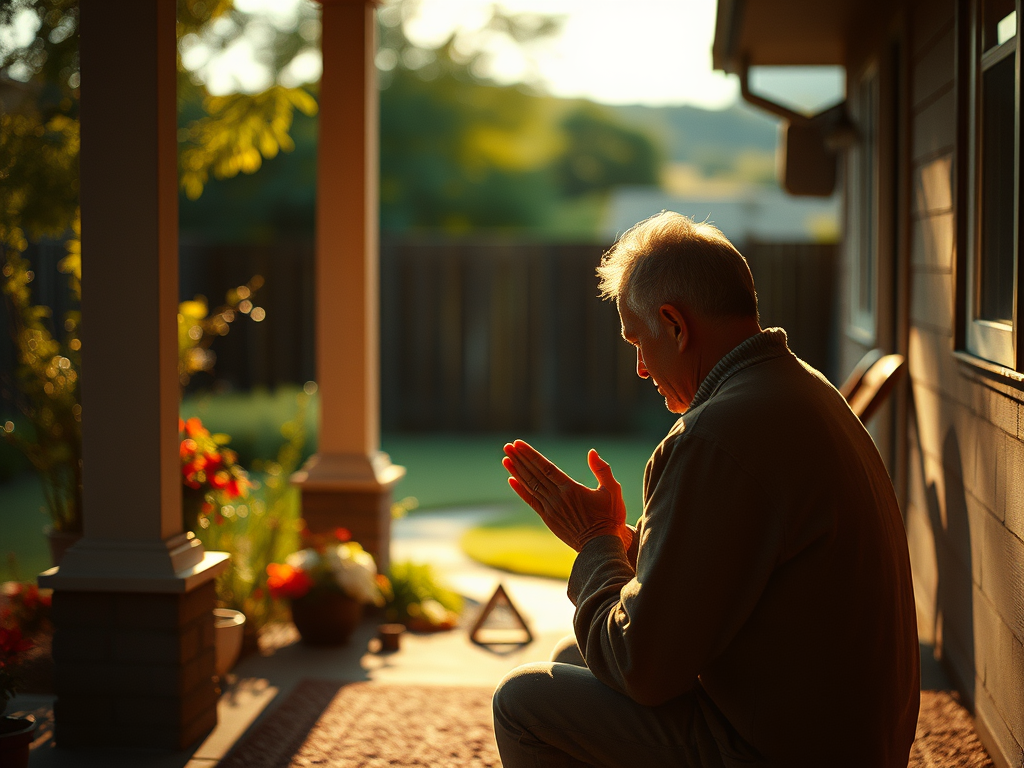
In place of fear, Paul says that God’s Spirit gives us (1) power, (2) love, and (3) self-control. 3 for the price of 1. Good deal. We have power over our decisions, instead of being enslaved (consciously or subconsciously) by fear or lust or rage. We have love that motivates our decisions, instead of being driven by hate or anger. And we have self-control to guide our decisions, instead of being controlled by some other force. God’s Spirit supplies us with these characteristics, if we ask.
So what can we do? We can start by self-reflecting and introspecting on these underlying fears that we might have. Perhaps think out loud and process with a trusted friend, mentor, or counselor. But more importantly, we can and should ask God to enlighten us as we ask him to reveal our fears and to replace those fears with power, love, and self-control.
— Dave
P.S. Ironically, it took me sitting on a draft of this post for at least a couple of weeks before officially posting it, because… well, fear. Yup.
 DISCOURSE